


Abholung


Rückkehr
🎁 Benutze den Code WELCOME3 während des Bestellvorgangs, um Rabatt auf deine erste Buchung bei uns zu erhalten. Viel Spaß! ☀️

Mietwagen in der Türkei erschließen das Land auf eine Weise, die kein Shuttle und keine organisierte Tour erreicht. Die Distanzen sind groß, das Straßennetz solide, und das meiste, wofür man hierherkommt — von der lykischen Küste bis Kappadokien — liegt wenige Stunden vom Flughafen entfernt. Die lokale Flotte ist breit, die Flughäfen sind gut angebunden, und eine eigene Route ist hier wirklich der natürliche Weg.
Für die meisten Gäste wird der Wagen Teil des Urlaubs, nicht eine Pflicht. Drei oder vier Tage aus dem All-Inclusive nach Pamukkale oder zur Saklıkent-Schlucht; zwei Wochen entlang der Küste zwischen Antalya und Kaş; oder ein Städtewechsel in der Nebensaison.
Ein Paar landete im Mai in Antalya und unterschrieb den Vertrag auf der Motorhaube am Gate D. Fünf Minuten, Schlüssel, ab auf die D400. Der Shuttle zur Konzern-Schalter war noch nicht einmal abgefahren.
Bezahlung ist unkompliziert. Visa, Mastercard, Maestro und kontaktloses Bezahlen werden überall akzeptiert; Kreditkarte verlangen nur die internationalen Ketten. Lokale Vermieter nehmen Barkautionen in EUR, USD oder TRY. Die meisten Gäste zahlen 15–20% Anzahlung online, den Rest bei Übernahme.
Die häufigste Frage: braucht man eine Kreditkarte? Nicht bei uns. Eine Visa/Mastercard-Debitkarte oder zweihundert Euro Bargeld reichen bei fast jedem lokalen Anbieter.
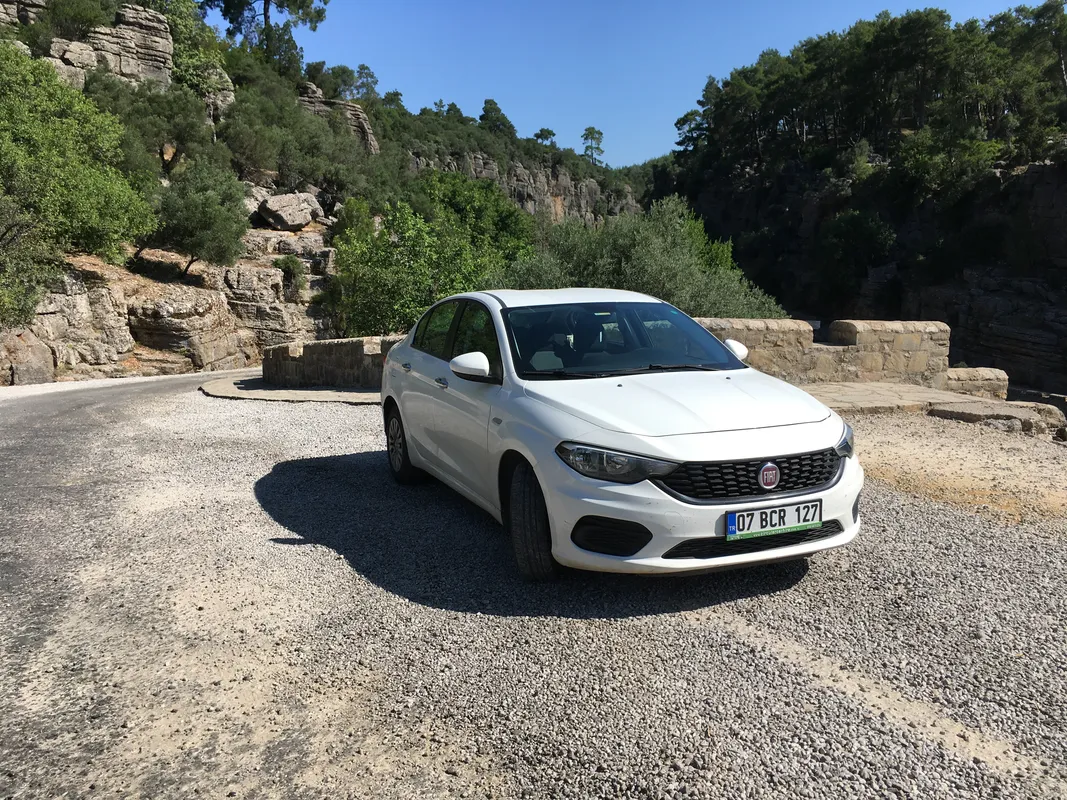
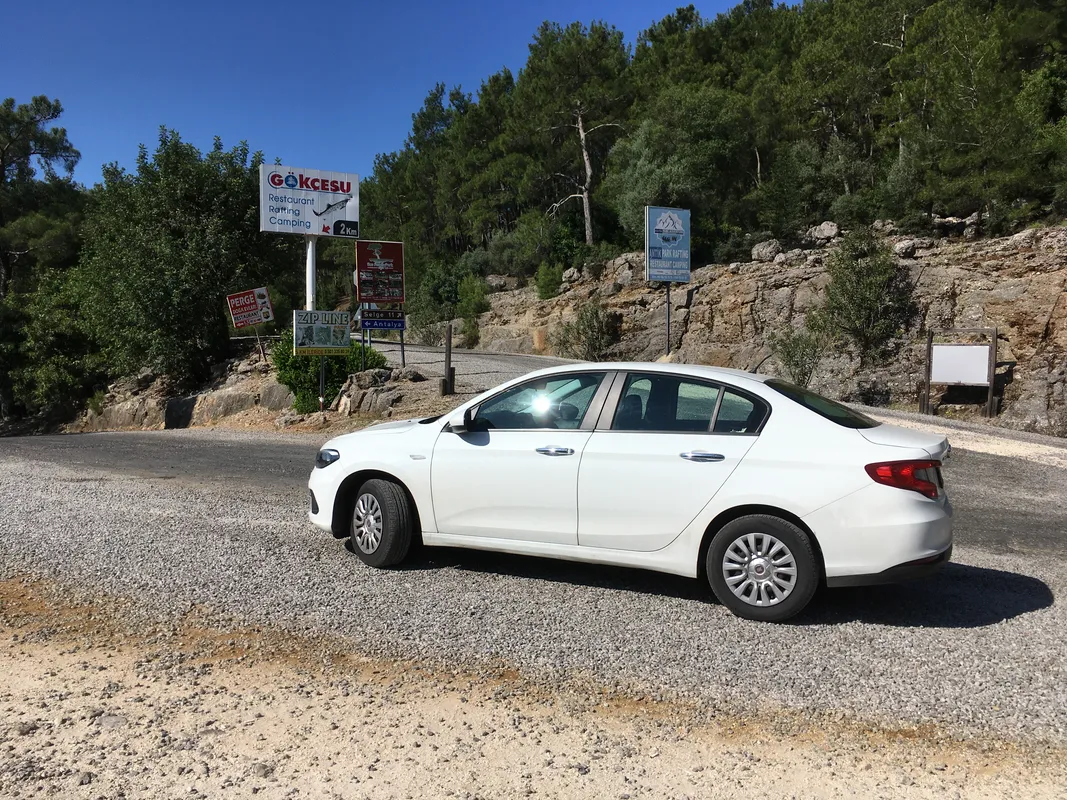
Die Flotte beginnt beim Fiat Egea — dem häufigsten türkischen Mietwagen — und reicht bis zum Achtsitzer-Minivan. Wagen meist Baujahr 2020 oder neuer.
Was Sie brauchen
Die Liste ist kurz: Reisepass mit Einreisestempel und gültiger Führerschein. EU- und EWR-Führerscheine werden direkt akzeptiert — der deutsche EU-Kartenführerschein funktioniert wie in Spanien oder Griechenland. Internationaler Führerschein nicht nötig — nur bei Führerscheinen in nicht-lateinischer Schrift verlangt.
Deutsche Gäste brauchen keinen internationalen Führerschein. Der EU-Kartenführerschein reicht — anders als bei USA oder Japan.
Mindestalter: 21 Jahre mit zwei Jahren Fahrpraxis. Premium, 4×4 und Minivans meist ab 25. Fahrer unter 25 zahlen einen Jungfahrer-Aufschlag von rund $10/Tag bei lokalen Anbietern.
Die Bezahlung ist deutschen Reisenden vertraut. Visa, Mastercard, Maestro und Apple/Google Pay funktionieren bei der Online-Anzahlung. Karten von Sparkasse, DKB, ING-DiBa, Commerzbank, Deutsche Bank und N26 funktionieren normal — wichtig: eine reine Girocard ohne Maestro/V-Pay-Logo wird meist nicht akzeptiert. Bei Übernahme nehmen lokale Anbieter Bargeld in EUR, USD oder TRY; Ketten verlangen Kreditkarte auf den Hauptfahrer.
Mit DKB-Visa, ING-Debitkarte oder N26 sind Sie gut aufgestellt. Plus 200–300 Euro Bargeld als Reserve.
Vor Verlassen des Parkplatzes prüfen Sie das Auto gegen den Voucher: Modell, Baujahr, Getriebe, Kraftstoff. Stille Tauschaktionen „auf dieselbe Klasse" kommen in der Hochsaison vor.
Die meisten Touristen in der Türkei beginnen ihre Reise hier
Was es kostet
Die Preise folgen der Saison. In der Nebensaison startet der Fiat Egea — der häufigste türkische Mietwagen — bei $8–10/Tag manuell und $12–15 mit Automatik. Mittelklasse wie Renault Megane oder Hyundai i30 liegt bei $12–20. Familien-Minivans bei $60–80.
In der Hochsaison (Juni–September) verdreifachen sich die Preise grob: Egea ab $35, Mittelklasse $45–55, Minivans $120–180. Im Juli und August sind bessere Wagen 2–3 Wochen im Voraus weg — Mietwagen in Bodrum oder Antalya früh buchen, am besten gleich mit dem Flug.
Eine Familie landete im Juli ohne Buchung in Antalya und bekam einen manuellen Egea zum Preis eines Duster. Im August ist die Flotte einen Monat im Voraus ausverkauft.
Über den Tagespreis hinaus enthält der Voucher meist: Haftpflicht (in der Türkei gesetzlich Pflicht), Basis-Vollkasko mit Selbstbeteiligung, Flughafenzuschlag, optionale Vollkasko ohne SB, Jungfahrer-Aufschlag und ggf. Einwegmiete. Mautgebühren und Bußgelder werden nach Rückgabe abgerechnet, mit kleiner Vermittlungsgebühr.
Der Preis auf dem Voucher ist der Preis, den Sie zahlen. Was nicht in der Aufschlüsselung steht, kommt auch nicht auf die Rechnung.
Bargeld-Kautionen je Klasse: ca. $100 für Economy, $200–300 für Mittelklasse, bis $500 für Minivan. Einige Anbieter haben Null-Kautions-Tarife — bei voller Vollkasko ohne SB wird gar keine Kaution geblockt.

Citroen C3 in der Türkei
Die Mietvereinbarungen wurden nicht eingehalten. Auf dem Rückweg sind wir schließlich selbst zur Wohnung gefahren. Die Person, die das Auto gemietet und von uns abgeholt hat, sprach kein Englisch und hatte andere Zeitangaben. Das Multimediasystem war nicht eingestellt und das Auto kam mit leerem Tank an.
Renault Clio 5 in der Türkei
wir mussten ein bisschen auf das Auto warten, aber sie brachten uns vom Flughafen zum Büro, um uns das Warten zu erleichtern. Das Auto war eine Art besseres Auto, ein Diesel. Das Auto war technisch ein bisschen alt, man konnte sehen, dass es verprügelt worden war, vielleicht sogar einmal schlecht verprügelt und schlecht repariert. und das anstößigste ist, dass ich harnstoff in das auto geschüttet habe, als die glühbirne anging, obwohl ich theoretisch genug harnstoff gehabt hätte, um dorthin zu kommen und das auto zu übergeben, aber ich bin kein risiko eingegangen, um den flug nicht zu verpassen.... Ich musste kaufen und einfüllen, und es war nicht einmal ein Trichter im Auto, sie haben mich nicht für Harnstoff entschädigt, obwohl ich 5 Liter eingefüllt habe (sie verkaufen nicht weniger), und das ist für 5-6 Tausend km, und ich bin 1 Tausend km gefahren.
Hyundai Bayon in der Türkei
Alles ist gut gelaufen. Ausgezeichneter Service. - bequeme Rückgabe (ich habe das Auto in der Nähe des Flughafens bekommen) - sehr bequeme Rückgabe (das Auto wurde direkt an der Ankunftslinie abgeholt). Wenn Sie es halten können, ist es ein Wettbewerbsvorteil: nicht nur zu übergeben, sondern auch Autos zu übergeben - sehr bequem. Viel Glück und Entwicklung Ihres Dienstes!
Renault Megane Sedan in der Türkei
alles ist in Ordnung. Die Kehrseite der Medaille ist, dass ich, da russische Karten nicht funktionieren, 100 Dollar extra für die Kaskoversicherung zahlen musste, obwohl im Voucher keine Informationen darüber enthalten waren.

Fiat Egea Multijet in der Türkei
Alles ist großartig.

Renault Clio 5 in der Türkei
Ich möchte meine Eindrücke von meiner Reise in die Türkei im September 2024 und der Autovermietung mit TakeCars teilen. Ich habe einen Reno Clio mit Vollversicherung für 7 Tage auf der TakeCars-Website gebucht. Bei der Buchung auf der Website habe ich einen Teil des Preises mit einer russischen Karte bezahlt. Bei der Ankunft haben mich die Jungs schnell am Flughafen abgeholt, sprachen ein wenig Russisch + Smartphone-Übersetzer :). Wir waren innerhalb von 10 Minuten im Büro, und während die Dokumente ausgefüllt wurden, wurden wir mit Kaffee verwöhnt. Das Auto war ein Hunday i20, aber aus der gleichen Serie, also waren wir zufrieden. Es hat uns nie im Stich gelassen, ein sparsames und zuverlässiges Auto. Wir fuhren gleich nach Oludeniz, dann an der Küste entlang nach Kemer. Das Auto wurde ohne Probleme und unnötige Fragen übernommen. Dadurch haben wir viele schöne und sehr schöne Orte gesehen, Strände von Fethiye bis Kash, Schmetterlingsbucht, Saklikent-Schlucht, Lykischer Pfad, antike Amphitheater und vieles mehr auf dem Weg. Sie sollten unbedingt mit dem Auto reisen. Ich empfehle TakeCars. Schnell, preiswert und zuverlässig!

Renault Clio 4 in der Türkei
Die Anmietung verlief gut, der einzige Nachteil ist, dass die Versicherungsinformationen anders sind, als auf der Website bei der Buchung angegeben.

Citroen C3 in der Türkei
Statt des Citroen C3 haben wir den Fiat Egea für das gleiche Geld bekommen, ansonsten ist alles hervorragend, alles sehr angenehm.

Fiat Fiorino in der Türkei
Positiv war, dass sie mir ein etwas höherwertiges Auto gaben, aber es war ein Benziner, kein Diesel. Die Kehrseite war, dass sie meine Debitkarte als Kaution nicht akzeptieren wollten, eine halbe Stunde lang diskutierten und versuchten, ihre eigene Versicherung durchzusetzen. Am Ende nahmen sie eine Kaution von 200 Euro in bar. Hätte ich keine Bargeldkaution hinterlegt, hätten sie es wahrscheinlich abgelehnt.
Fiat Egea in der Türkei
Die Entgegennahme des Fahrzeugs war furchtbar! Wir haben über eine Stunde lang auf das Auto gewartet. Wir bestellten einen Diesel, aber sie brachten Benzin. Auf die Frage, warum, antworteten sie, dass keine anderen Autos verfügbar seien. Das Auto war sehr schmutzig und das Benzin fehlte völlig. Wir fragten, wo wir tanken könnten, und man sagte uns, dass der leere Tank nur unser Problem sei. Der Manager hatte kein Wechselgeld, er versprach, das Wechselgeld bei Übernahme des Autos zurückzugeben, aber natürlich haben wir es vergessen. Im Allgemeinen bekam absolut "unzureichend" und die meisten unhöflich Manager. Weitere Probleme sind nicht aufgetreten!

Fiat Egea Urban in der Türkei
Ausgezeichneter Zustand des Autos, froh, dass ich den Dieselmotor gewählt habe. Erhalt und Rückgabe des Autos - schnell und ohne Probleme. Würde empfehlen!

Citroen Berlingo in der Türkei
Toll! Feuer!!! Werde euch weiterempfehlen!!!

Fiat Egea Multijet in der Türkei
Ich kann die Zusammenarbeit mit Sefa und seinem Team guten Gewissens empfehlen. Das Auto wurde in gutem Zustand geliefert und verursachte während der Mietzeit keine Probleme. Außerdem erstattete Sefa von sich aus die Kosten für AdBlue.

-
Verifizierte Bewertungen pro Auto
Sie sehen, wie sich dieser Egea oder Duster bewährt hat — nicht nur die Durchschnittsbewertung des Anbieters.
-
Voucher-Preis ist Endpreis
Alle Steuern, Basis-Versicherung und Gebühren enthalten — keine Neuberechnung am Schalter.
-
Kostenlose Stornierung bis 7 Tage
Direktnachricht mit dem Anbieter klärt die Details mit der Person, die Ihnen die Schlüssel übergibt.
Maut und HGS
Seit März 2022 läuft die Türkei mit einem einheitlichen Mautsystem auf den Autobahnen — HGS (Hızlı Geçiş Sistemi). Schranken wurden entfernt, am Mautpunkt nimmt niemand Bargeld oder Karten an. Jeder Mietwagen trägt einen aktiven HGS-Aufkleber an der Frontscheibe; die Gebühr wird beim Portaldurchfahren abgebucht.
Unter einem HGS-Portal müssen Sie nicht abbremsen. Der Aufkleber liest bei 30 und bei 110 km/h. Wichtig: er muss tatsächlich kleben.
Istanbuler Brücken
Die Bosporus-Übergänge haben eigene Logik. An den drei Hängebrücken — 15 Temmuz, Fatih Sultan Mehmet und Yavuz Sultan Selim — zahlen Sie nur in Richtung Europa nach Asien. Zurück gratis. Die Osmangazi-Brücke und der Eurasia-Tunnel sind in beide Richtungen kostenpflichtig.
Ein Gast auf der Strecke Istanbul–Izmir zahlte im März die Osmangazi zweimal und fuhr dann über die 15 Temmuz gratis zurück. Die Differenz reichte für ein gutes Abendessen.
Was es kostet
Richtwerte 2026: Eurasia-Tunnel ca. ₺225 tagsüber, Osmangazi-Brücke ca. ₺795, Istanbul–Ankara ca. ₺150, Istanbul–Izmir ca. ₺500. Kostenlose Alternativen fast überall, +30–90 Minuten.
HGS rechnen wir nach Rückgabe ab. Eine kleine Bearbeitungsgebühr ist Standard — bei uns vom ersten Tag im Vertrag, ohne Überraschungen. Jeder unserer Wagen hat aktives HGS, doch eine kurze Bestätigung bei der Übernahme schadet nicht.
Verkehrsregeln und Bußgelder
Geschwindigkeitslimits: 50 km/h innerorts, 90 km/h Landstraße, 120 km/h Autobahn. Für Autobahn gilt zusätzlich Mindesttempo 40 km/h. Anders als auf der deutschen Autobahn gilt hier ein festes Höchsttempo. Blitzer und Streckenkontrollen häufig an Stadteinfahrten und Mautabschnitten.
Alkohol am Steuer
Türkei hat eine ungewöhnliche Regel: 0,5‰ wenn der Fahrer allein ist, 0,0‰ sobald er einen Beifahrer hat — Erwachsener oder Kind, kein Unterschied. Bußgeld bei erster Übertretung ca. ₺6 400.
Die Regel klingt seltsam, bis Sie die Logik hören: allein — Ihre Sache; mit Beifahrer — Sie tragen Verantwortung. Über 0,5‰ greift keine Versicherung mehr.
Kinder und Ausstattung
Kinder unter 12 auf den Rücksitzen; unter 135 cm benötigen Kindersitz. Anbieter $3–7/Tag pro Sitz — bei Buchung dazubuchen. Radarwarner und Störsender sind verboten, auch in der Navigation.
Bußgelder und Parken
Türkei belohnt schnelles Zahlen: 25% Rabatt vor Ort, weitere 25% innerhalb von 15 Tagen. Blitzer-Bußgelder leitet der Vermieter mit $15–30 Bearbeitungsgebühr weiter. Im Zentrum Istanbuls Parken kostenpflichtig — nutzen Sie İSPARK oder Hotel-Parkhaus. Rund um Marmaris und Fethiye meist kostenlos.
Parken im Istanbuler Zentrum ist immer eine Jagd. In Sultanahmet fahren Sie gleich zu einem İSPARK — ein Strafzettel kommt schneller als ein freier Platz.
In kleineren İSPARK-Plätzen läuft die Abrechnung oft noch über Papier-Tickets — ein paar Münzen in der Tasche sind nützlich.
Versicherung und Grenzen
Haftpflicht (TPL) ist in der Türkei gesetzlich Pflicht und in jeder Miete enthalten. Basis-Vollkasko (CDW) meist ebenfalls dabei, mit Selbstbeteiligung. Standard-Ausschlüsse: Glas, Räder, Felgen, Unterboden, Innenraum.
Etwa 70% nehmen Vollkasko ohne SB. In Istanbul oder auf Kappadokiens Serpentinen ist eine SB von $1500 schon ein Kratzer auf dem Kotflügel. Vollkasko ohne SB nimmt das Risiko für $8–15/Tag.
Was Vollkasko ohne SB abdeckt
Vollkasko ohne SB (Super CDW / Full Coverage) deckt Glas, Räder, Felgen und Diebstahl und reduziert die SB auf null. Nicht enthalten: Trunkenheit, Geländefahrt, unbezahlte Maut, Abschleppen. Auf Bergstrecken Standard; an der Küste in Belek, Side oder Kemer bleiben viele bei der Basis-Police.
Nach einem Unfall
Nach jedem Vorfall, auch einem Kratzer, rufen Sie 154 (Verkehrspolizei) und warten. Der Polizeibericht ist Pflicht — ohne ihn zahlt keine Versicherung. Bewegen Sie das Auto nicht; informieren Sie parallel den Anbieter.
Nicht vor Ort regeln. Ohne Polizeibericht greift die türkische Versicherung nicht — der Mieter bleibt allein mit der Rechnung.
Grenzübertritt
In der Regel nicht erlaubt. Versicherung erlischt an den Grenzen zu Griechenland, Bulgarien, Armenien und Iran. Georgien gelegentlich mit schriftlicher Genehmigung möglich. Nordzypern per Fähre aus Taşucu mit Anbieter-Freigabe möglich.
Die Tarife in der Türkei variieren je nach Saison und Mietdauer.
- Januar
- Februar
- März
- April
- Mai
- Juni
- Juli
- August
- September
- Oktober
- November
- Dezember
- Jan
- Februar
- März
- Apr.
- Mai
- Jun
- Jul
- Aug
- Sep
- Okt.
- Nov.
- Dez.
 Wie teuer ist es, in der Türkei einen Wagen zu mieten: durchschnittliche Tagesraten für eine einwöchige Autovermietung, über alle Fahrzeugklassen. Lieferung in ganz Türkei nicht enthalten.
Häufig gestellte Fragen
Ja, zwischen großen Städten und Flughäfen — Istanbul ↔ Antalya, Antalya ↔ Izmir, Antalya ↔ Dalaman und ähnlichen. Einwegmiete-Gebühr ab $200–300 je nach Strecke. In der Hochsaison sind diese Wagen schnell weg, also früh buchen. Internationale Einwegmiete aus der Türkei nicht möglich.
Gesetzlich nicht, aber im Osten der Türkei, im Taurus-Gebirge, in Kappadokien und an der Schwarzmeerküste von November bis April dringend empfohlen. Schneeketten sind als Reserve auf steilen Bergstraßen nützlich. Spikes sind in der gesamten Türkei verboten. Für Antalya, Bodrum und Izmir sind Winterreifen meist überflüssig.
Istanbul IST passt zur Stadt und zum Nordwesten. Sabiha Gökçen SAW liegt näher zur asiatischen Seite und ist eine gute Basis für Kappadokien. Antalya AYT ist der Haupt-Hub der türkischen Riviera und der wichtigste TUI-, FTI- und Alltours-Charterflughafen. Dalaman DLM bedient Marmaris, Fethiye und Ölüdeniz; Bodrum BJV die Ägäis-Küste; Izmir ADB Ephesus und Çeşme.
In der Türkei kommt das häufiger vor als in Westeuropa. Einige Anbieter geben den Wagen mit minimalem Sprit aus und verlangen ihn so zurück — die voll-zu-voll-Konvention ist hier nicht universell. Fotografieren Sie das Cockpit bei Übernahme und stellen Sie sicher, dass der Tankstand auf dem Übergabeprotokoll vermerkt ist.
Bei unseren lokalen Anbietern nicht. Eine Debitkarte, Maestro oder kontaktlos reicht für die Online-Anzahlung, den Rest und die rückzahlbare Kaution begleichen Sie bar bei Übernahme (EUR, USD oder TRY). Eine Kreditkarte auf den Hauptfahrer verlangen nur die internationalen Ketten, die in der Türkei nach eigenen Standards arbeiten.
Ja, direkt. Der deutsche EU-Kartenführerschein wird bei allen Anbietern wie ein französischer oder italienischer akzeptiert. Ein internationaler Führerschein ist nicht nötig — er wird nur bei Führerscheinen in nicht-lateinischer Schrift verlangt (z. B. arabisch, kyrillisch).
Deutsche nicht. Der EU-Führerschein wird ohne Zusatzdokument akzeptiert. Ein internationaler Führerschein ist nur für Führerscheine außerhalb der EU mit nicht-lateinischer Schrift relevant.
21 Jahre mit mindestens zwei Jahren Fahrpraxis. Premium, 4×4 und Minivans meist ab 25. Fahrer 21–24 zahlen Jungfahrer-Aufschlag von rund $10/Tag. Eine Höchstaltersgrenze gibt es selten; einige Anbieter verlangen ab 70 ein ärztliches Attest.
Hängt von der Klasse ab: ca. $100 für Economy, $200–300 für Mittelklasse, bis $500 für Minivan. Bei lokalen Anbietern wird die Kaution meist bar gezahlt und bei Rückgabe sofort zurückgegeben. Null-Kaution-Tarife gibt es bei voller Vollkasko ohne SB.
HGS ist seit 2022 das einzige elektronische Mautsystem auf türkischen Autobahnen. Jeder Mietwagen hat einen aktiven Aufkleber, die Gebühr wird beim Durchfahren des Portals abgebucht. Richtwerte: Istanbul–Ankara ca. ₺150, Istanbul–Izmir ca. ₺500. Der Anbieter rechnet HGS nach Rückgabe ab, mit fest im Vertrag stehender kleiner Bearbeitungsgebühr.
Nur in Richtung Europa nach Asien. Die drei Hängebrücken (15 Temmuz, Fatih, Yavuz) sind in der Gegenrichtung kostenfrei. Die Osmangazi-Brücke auf der Autobahn Richtung Izmir und der Eurasia-Tunnel unter dem Bosporus sind beidseitig kostenpflichtig. Zahlung nur per HGS.
0,5‰ wenn der Fahrer allein im Auto ist, 0,0‰ sobald ein Beifahrer dabei ist (Erwachsener oder Kind). Diese Regel überrascht viele Touristen. Motorräder und Kleintransporter mit Anhänger haben 0,2‰. Bußgeld bei der ersten Übertretung rund ₺6 400, Versicherung ab 0,5‰ erloschen.
Ja. Türkisches Recht verlangt einen Polizeibericht (154, Verkehrspolizei) bei jedem Schaden, auch bei einem Kratzer. Ohne Bericht zahlt die Versicherung nicht und die Reparatur geht von der Kaution. Bewegen Sie das Auto nicht bis zur Ankunft der Polizei. Informieren Sie parallel den Anbieter — er führt Sie vor Ort.
Einreise nach Griechenland, Bulgarien, Armenien, Iran, Syrien oder Irak nicht erlaubt — Versicherung erlischt an der Grenze. Georgien gelegentlich mit individueller Genehmigung und Aufschlag $100–200 möglich. Nordzypern gelegentlich per Fähre aus Taşucu oder Mersin mit schriftlicher Genehmigung. Die Republik Zypern ist für türkische Mietwagen geschlossen.
Bei einigen türkischen Anbietern ja — 150–250 km/Tag, abweichend vom in Europa üblichen unbegrenzten Standard. Überschreitung kostet $0,20–1 pro km. Für lange Strecken wie Istanbul–Kappadokien (730 km) oder Antalya–Pamukkale (240 km) wählen Sie bei der Buchung einen Tarif mit unbegrenzten Kilometern.